Move-out inspection checklist
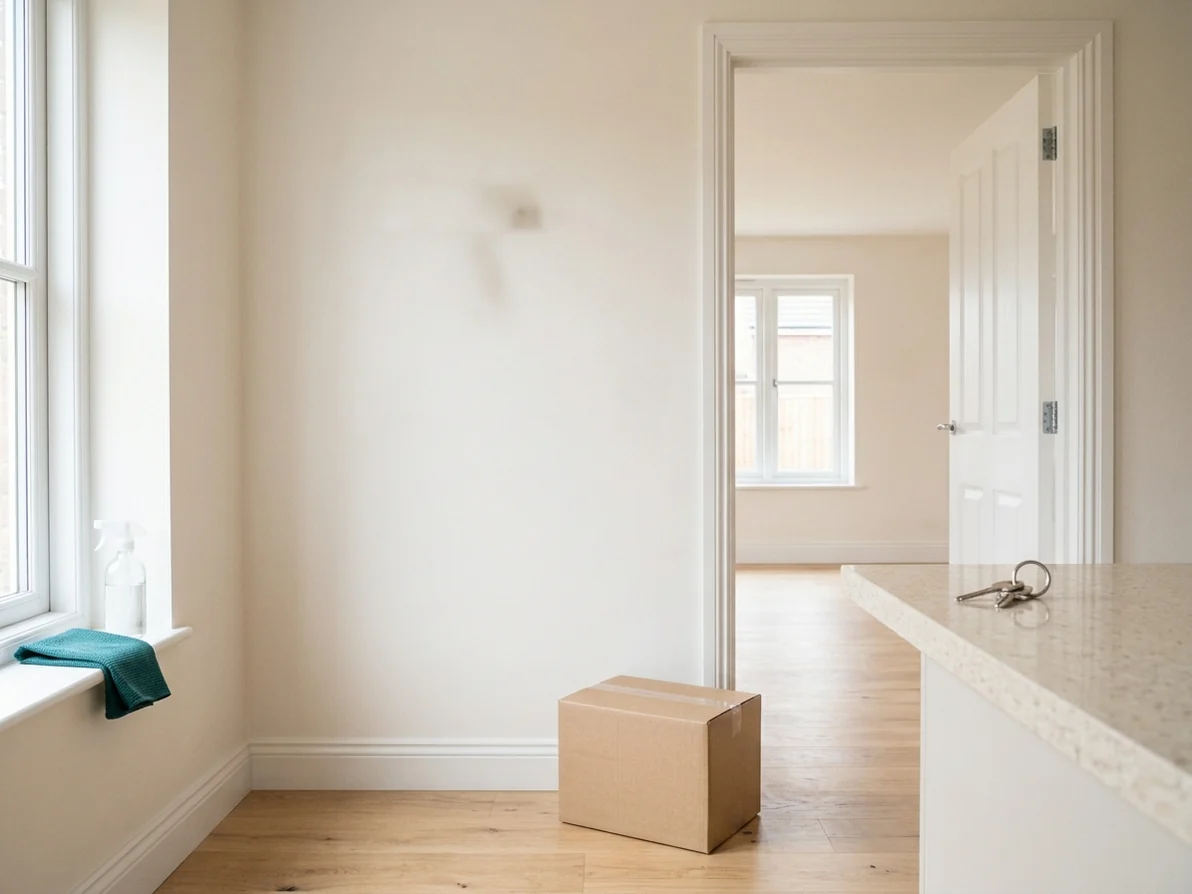
Before you hand back the keys, walk through the home once more, fix or clean what you can, and record the condition with dated photos. Compare it with your move-in record so you can answer any deduction calmly.
Open the interactive checklist
No sign-up. Your notes stay on your device. Make the report in English or Chinese.
Download the printable PDF (A4, English + Chinese)
Before you start
- Find your move-in report or photos (you can import a SettleJoy backup on any device).
- Clean first, then inspect — cleaning is the most common dispute item.
- Photograph every room after cleaning, plus final meter readings.
- Return every key and get a receipt.
- Give a forwarding address and ask when the deposit will be returned.
The checklist, room by room
Tick each item OK, issue or not applicable. Grey text explains how to check.
Entrance
- Front door opens and closes smoothly, no rubbing
Open and close it fully 3 times and listen for rubbing. The gap around a closed door should look roughly even. - Every key, card or code opens the lock
Try each key or card yourself, not just one. A door closer should shut the door gently, not slam it. - No cracks where the door frame meets the wall
Look along all four sides of the frame for cracks or gaps in the sealant. Tools: Torch - Door and frame free of scratches and dents
Shine a torch at a low angle across the surface — scratches show up much more clearly. Tools: Torch - Doorbell / intercom works
Ask someone to ring from outside or from the lobby; check sound, video and the door-release button.
Living / dining room
- Walls have no cracks, holes or stains; paint is even
Shine a torch along the wall at a low angle; patches and dents become visible. Tools: Torch - Ceiling has no water stains or cracks
Pay attention near windows and outside walls. - Floor not cracked, chipped, scratched or hollow-sounding
Tap tiles with a coin; photograph scratches on wooden floors with something for scale. Tools: Coin - Room door, handle and lock work
Open, close and lock it a few times. - Windows open, close and lock; screens and blinds OK
Slide or open each window fully. - No leak marks or mould around window frames
The bottom corners are the most common spots. Tools: Torch - Sockets are live and wired correctly
Use a plug-in socket tester; note any abnormal light pattern. Tools: Socket tester - Skirting boards and trims intact
Walk around the room once. - Lights and switches work
Switch each one on and off.
Bedroom (each)
- Walls have no cracks, holes or stains; paint is even
Shine a torch along the wall at a low angle; patches and dents become visible. Tools: Torch - Ceiling has no water stains or cracks
Pay attention near windows and outside walls. - Floor not cracked, chipped, scratched or hollow-sounding
Tap tiles with a coin; photograph scratches on wooden floors with something for scale. Tools: Coin - Room door, handle and lock work
Open, close and lock it a few times. - Windows open, close and lock; screens and blinds OK
Slide or open each window fully. - No leak marks or mould around window frames
The bottom corners are the most common spots. Tools: Torch - Sockets are live and wired correctly
Use a plug-in socket tester; note any abnormal light pattern. Tools: Socket tester - Skirting boards and trims intact
Walk around the room once. - Lights and switches work
Switch each one on and off.
Kitchen
- Sink drains well, no leaks underneath
Fill the sink halfway, let it drain, then wipe the joints underneath with a tissue to see if they are damp. Tools: Tissue - Hot and cold water both work at the tap
Run both. Hot water may take a while if the heater has to start first. - Worktop has no chips, cracks or burn marks; sealant is continuous
Use a torch at a low angle along the worktop and the joint with the wall. Tools: Torch - Cupboard doors, hinges and drawers work and line up
Open and close every door and drawer once. - Cooker hood / extractor works
Try every speed; hold a tissue near it to feel suction. Tools: Tissue - Hob and oven switch on
If gas or power is not connected yet, mark N/A and note it for a follow-up visit. - Kitchen sockets are live
Use a plug-in socket tester on each socket. Tools: Socket tester - Supplied appliances work and are clean inside (fridge, oven, washer…)
Open each one and photograph the inside. Note existing marks, smells or missing shelves.
Bathroom (each)
- Floor drains well, no standing water
Pour a bucket of water and watch where it goes; photograph any puddle left behind. Tools: Bucket - No drain smells
Check that floor drains have a water trap or anti-odour cover. - Toilet flushes, refills and is firmly fixed
Flush twice and watch the cistern refill; push gently to make sure it doesn't rock. - Basin drains well, no leaks underneath
Run water, then wipe the joints underneath. Tools: Tissue - Shower / bath: hot and cold water and pressure OK
Try hot and cold and switch between tap and shower head. - Tiles not cracked, chipped, loose or hollow
Tap tiles lightly with a coin; a clearly hollow sound can mean poor adhesion. Mark spots with masking tape and photograph. Tools: Coin, masking tape - Silicone sealant intact, no mould
Check around the bath, shower tray, basin and toilet base. - Extractor fan works
Switch it on and hold a tissue near the grille. Tools: Tissue - Shower screen or door closes properly, seals in place
Open and close it a few times; look for missing or loose seals.
Balcony / utility area (each)
- Floor drains, no standing water
Pour water and watch it flow to the drain. Tools: Bucket - Railings are firm
Push firmly by hand. If height or strength looks doubtful, ask a professional. Tools: Tape measure - Washing-machine water supply and drain are in place
Check there is a tap and a drain and enough space for a machine. - Balcony door or window slides and locks
Slide it all the way and lock it. - Water heater / boiler looks properly installed and vented
It should be fixed firmly and vent to open air. Gas appliances should be checked by a qualified technician. - No damp stains or white salt marks on walls or ceiling
White powdery deposits (efflorescence) often point to moisture. Photograph the location.
Whole home
- Breaker panel is labelled; RCD / GFCI test button trips
Press the test button, confirm it trips, then reset. If you are not comfortable doing this, ask the person handing over. - Smoke alarms (and CO alarms where required) present and working
Press each test button. Note any missing or painted-over alarm. - Meter readings photographed (electricity, water, gas)
Take a clear photo showing the numbers. This sets who pays for what from today. - Keys, fobs and remotes counted and tested
Write the number of each in the note, e.g. "3 keys, 2 fobs, 1 garage remote". - Heating / air-conditioning works
Switch each unit on for a few minutes. For new homes, check the pipe holes, drains and sockets are in the right places. - All lights and switches work
Switch each one on and off. - Cleanliness photographed room by room
Cleaning is the most common deposit dispute in the UK's TDS data — wide photos of floors, ovens, bathrooms and windows help. - No signs of pests, damp or mould
Look behind furniture, under sinks and in window corners. - Furniture and furnishings listed with their condition
Use the custom item box below to add each piece, e.g. "Sofa — small tear on left arm".
Parking, storage & mailbox
- Parking space number and location match the contract or lease
Compare with the plan or lease. - No leaks or standing water around the space
Look at the ceiling and walls nearby. - Mailbox and storage unit are accessible with your keys
Try each key.
Paperwork & handover
- Compared with your move-in report
Import your move-in backup on another device, or open the printed copy, and compare room by room. - All keys returned, with a receipt
Count them against the number on your move-in report. - Forwarding address given for the deposit return
Ask when the deposit will be returned and how deductions will be explained. - Backup or printed copy saved
Use Export backup on the report page, or print to PDF.
General checkpoints only — not a legal standard, a professional inspection or legal advice.
Open the interactive checklist
No sign-up. Your notes stay on your device. Make the report in English or Chinese.
Download the printable PDF (A4, English + Chinese)
Know the timeline
Rules differ by country. Example: in England and Wales, once you and your landlord agree how much of the deposit you get back, the landlord must return it within 10 days; if you disagree, the deposit stays protected in the scheme until the dispute is resolved.
Source: GOV.UK — Tenancy deposit protection (checked 2026-11-06).
Questions
What counts as normal wear and tear?
Usually gradual ageing from ordinary use — light scuffs, faded paint — rather than damage. Definitions vary by country and lease, so check yours.
I don't have a move-in report. Is it too late?
Record the move-out condition anyway. Dated photos still help, and you can ask the landlord for their check-in inventory.
Can I do the inspection together with the landlord?
Yes, that is often best. Go through the list together and note any disagreements in writing.